If you have a pool — or you're putting one in — the fence around it isn't optional, and it isn't just privacy. Florida has specific barrier requirements for residential pools to prevent child drownings. Here's what we build to.
Height and Climbability
A residential pool barrier in Florida generally needs to be at least 4 feet high on the outside, with no gaps, handholds, or footholds that a small child could use to climb over. We build to the requirements that apply to your property and permit.
Gates That Self-Close and Self-Latch
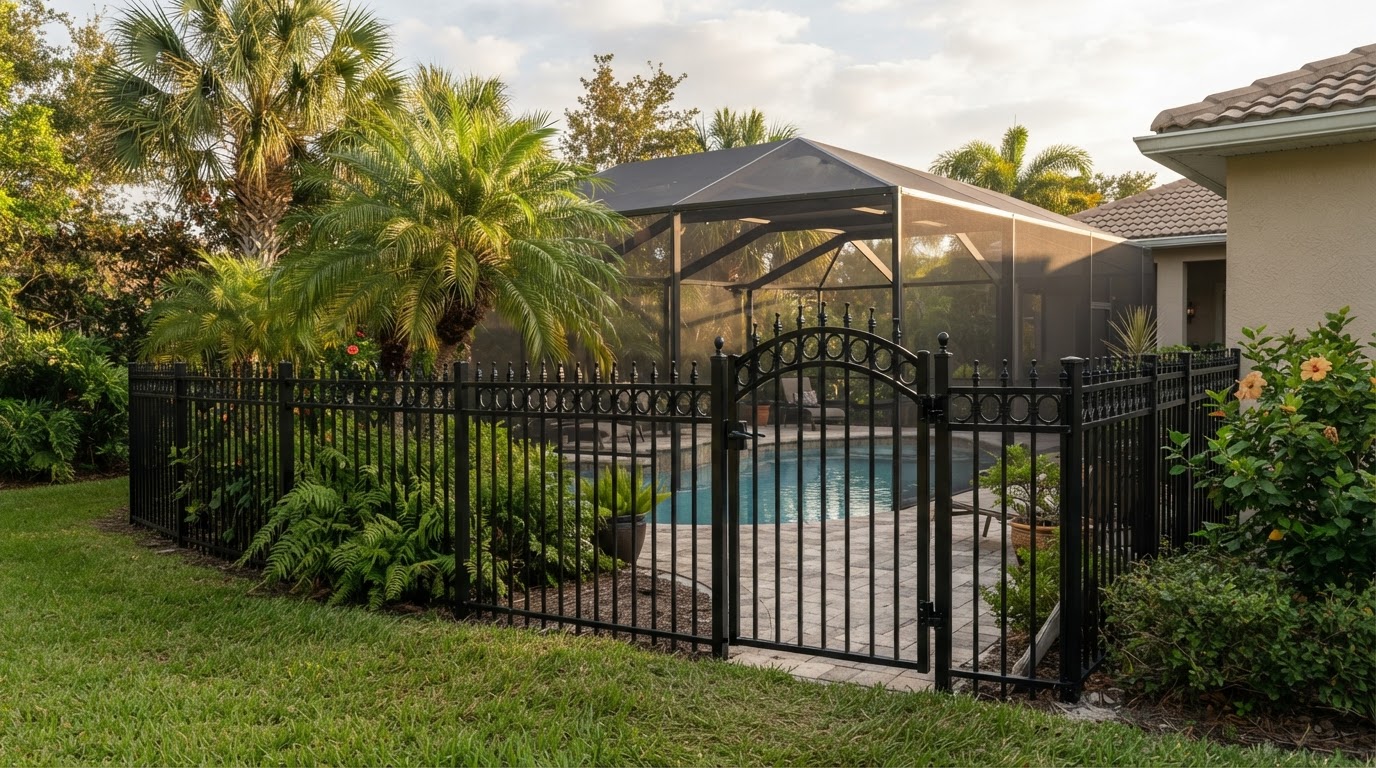
The gate is the part that gets failed most often. Pool gates must be self-closing and self-latching, with the latch placed on the pool side where a child can't reach it. The gate has to swing outward (away from the pool) and latch on its own from any open position.
We use heavy-duty, pool-code hinges and latches and reinforce the gate posts so the gate stays aligned and latches every time.
Why Aluminum Is the Common Choice
Aluminum doesn't rust, holds up to pool chlorine and salt air, and the pickets can meet gap requirements while still letting you see the pool. Rackable panels handle sloped yards without big gaps underneath.
Don't Forget the Permit
A pool fence almost always needs a permit and inspection. We'll help you put together what the county needs so the barrier passes the first time.
Want a straight written quote? Jeff walks the line, measures, and gives you honest options.