Rural Pasco and Hernando County run on good fence. Whether you're keeping cattle in, marking a property line, or splitting a pasture for rotation, the right material and a tight install are what keep it standing after a wet season. Here's how we think about it.
Match the Fence to the Animal
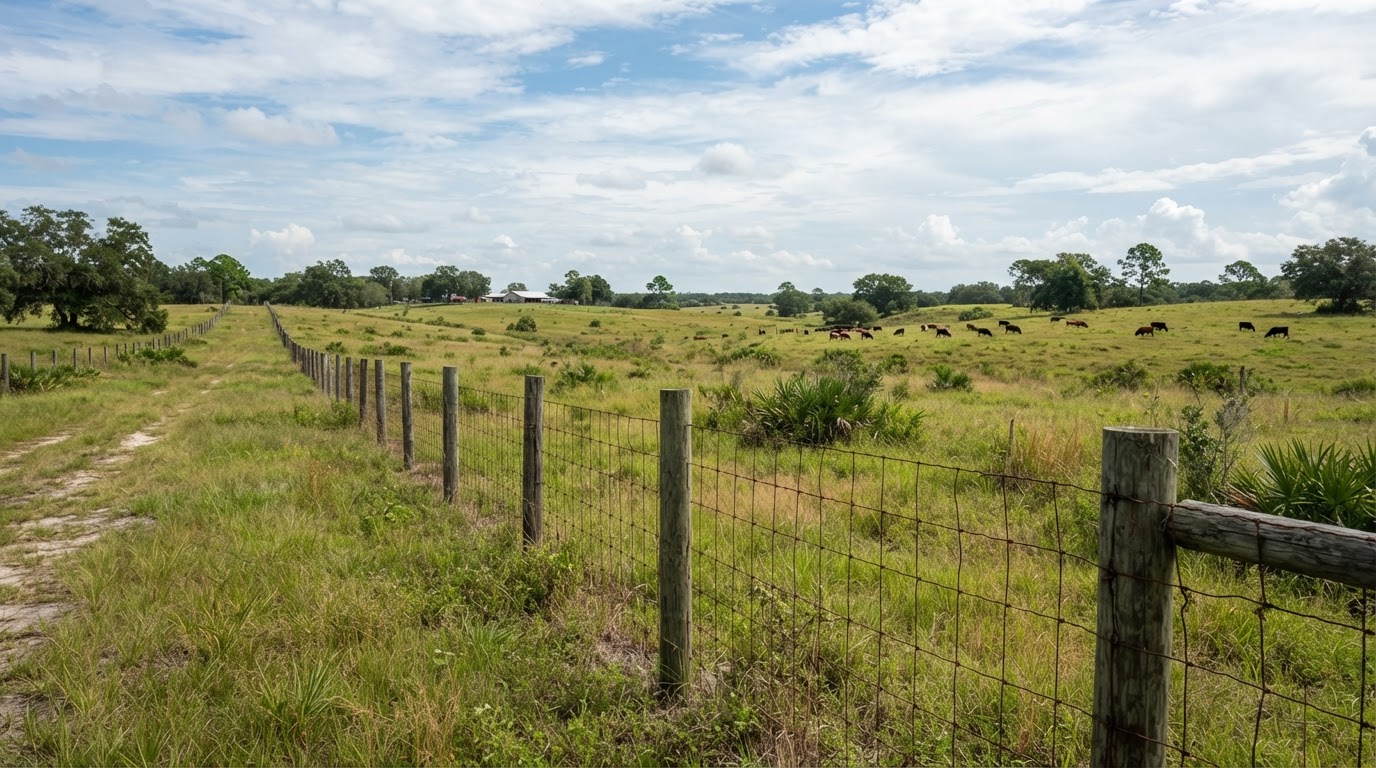
Cattle lean and push — a tight woven wire or field fence with braced corners holds them. Horses need visible, smooth fencing they won't get caught in. Goats test every gap, so smaller openings and solid bracing matter most for them.
- Cattle: woven wire or field fence, braced corners
- Horses: smooth wire or field fence, visible top rail
- Goats: small-opening woven wire, tight bracing
Wood vs. Steel Posts
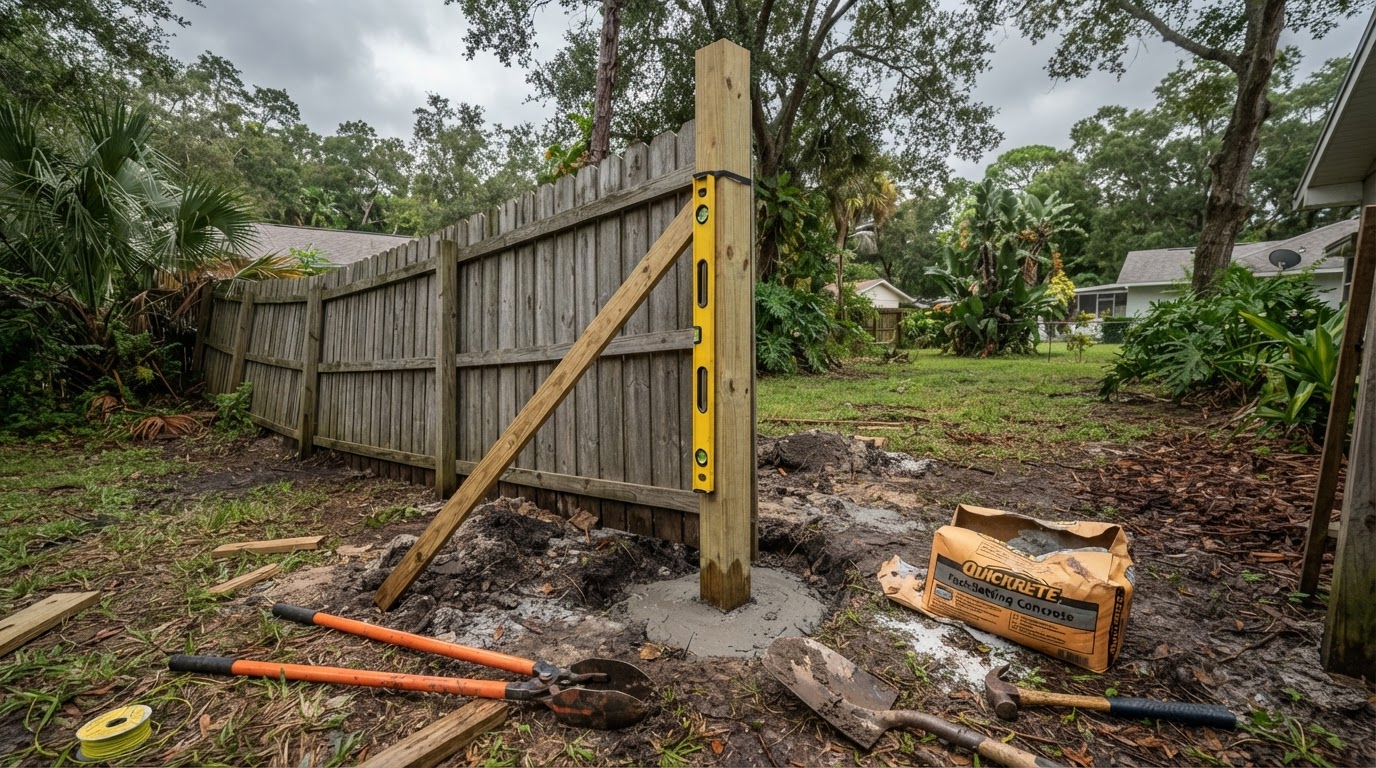
Both work. A common, cost-effective mix is wood corners and ends with steel line posts — the corners take the real load, the line posts hold the fabric between them. Sandy Florida soil loosens posts in wet seasons, so depth and bracing at the corners are what keep the fence tight.
Gates Wide Enough for Equipment
If a tractor, trailer, or truck needs through, the gate has to be wide enough with room to spare. We install farm gates in common widths and set the gate posts for the weight they'll carry so they don't sag.
Cross-Fencing for Rotation
Splitting one big pasture into smaller paddocks lets you rotate grazing and rest the grass. We can run cross-fencing to match your rotation plan.
Get It Quoted Right
We walk the line, measure the footage, and quote the full job — posts, bracing, gates, and clearing talk included. No guesswork.
Want a straight written quote? Jeff walks the line, measures, and gives you honest options.